Regional Collaboration Fuels a Battery Revolution
Lithium iron phosphate (LFP) batteries have emerged as one of the most promising energy storage technologies. Known for their safety, longevity, and cost-effectiveness, LFP batteries are gaining traction in electric vehicles (EVs), grid-scale energy storage, and industrial applications.
They offer thermal stability, long cycle life, and the ability to handle high charge and discharge rates. As global demand surges, North America is accelerating efforts to reduce reliance on imports—particularly from China, which produces nearly all LFP batteries for EVs, according to the International Energy Agency (IEA).
A powerful collaboration between First Phosphate and Ultion Technologies marks a major milestone toward building an independent, regional supply chain for LFP batteries.
Building a North American LFP Supply Chain
In 2023, First Phosphate and Ultion Technologies signed a memorandum of understanding to jointly develop a fully localized LFP battery supply chain across North America.
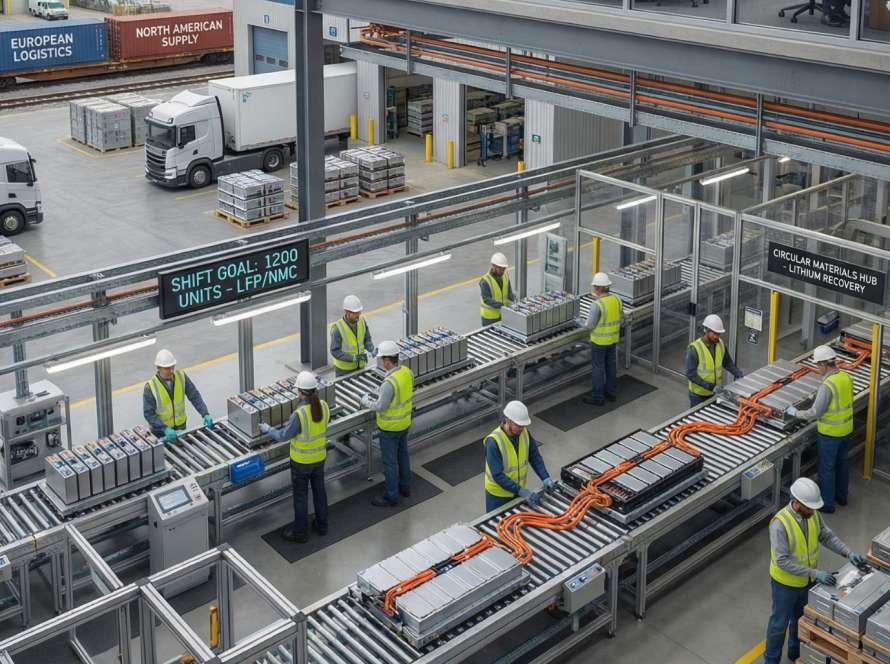
This partnership represents a strategic effort to connect domestic mining, processing, and battery manufacturing under one ecosystem. The goal is simple: create a “mine-to-cell” model that ensures regional energy independence, stable pricing, and job creation while supporting the clean energy transition.
First Phosphate’s Promising Results
First Phosphate, a Canadian mineral development company, recently announced strong commercial results from its PHOS–LFP 18650 battery cells. These cells were made entirely with critical minerals sourced from North America.
The results demonstrated high stability and performance, retaining at least 80% of their original capacity after 2,000 discharge cycles. The cells also maintained consistent voltage stability even at high discharge rates of up to 5C, making them suitable for demanding applications like electric mobility and renewable energy storage.
“The production of these commercial-grade PHOS–LFP 18650 Battery Cells shows that North America does have the ability to support an end-to-end LFP battery supply chain using our own critical mineral inputs,” said John Passalacqua, CEO of First Phosphate.
The company sourced high-purity phosphate and iron from its Bégin-Lamarche property in Quebec, lithium carbonate from Century Lithium Corp. in Nevada, and graphite from Nouveau Monde Graphite in Quebec.
Testing and Validation by Ultion Technologies
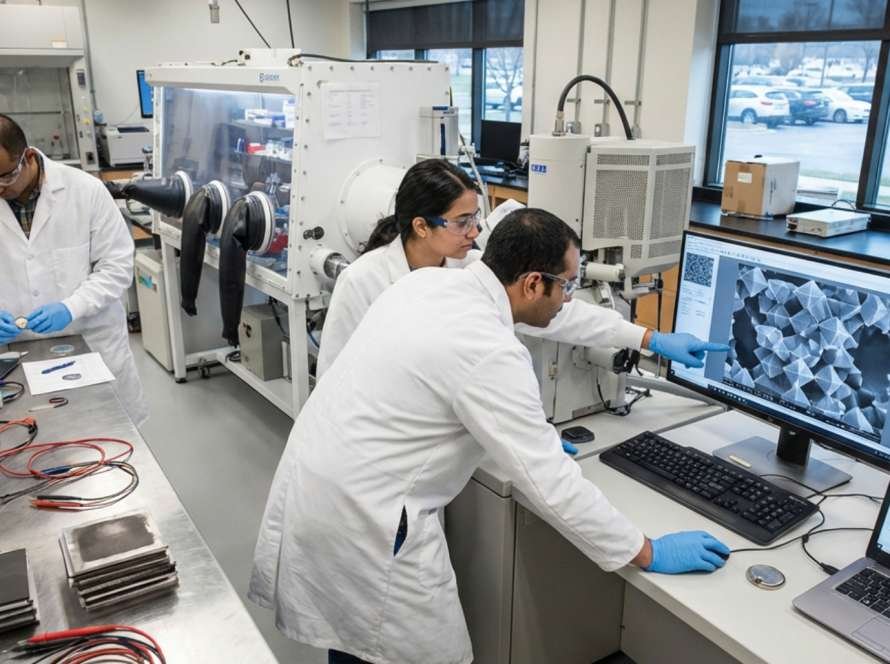
Ultion Technologies, based in Nevada, assembled and tested the cells using standard 18650 cylindrical formats, the same size commonly used in EVs and consumer electronics.
Independent testing confirmed a capacity of 1.6 amp-hours (Ah), aligning with global benchmarks for LFP batteries. According to the company, the cells demonstrated stable capacity, minimal variation, and strong performance at high discharge rates.
“We can now point to a working battery cell and say every critical material came from North America,” said Johnnie Stoker, CEO of Ultion Technologies. “From mine to finished cell, the supply chain is real, and the performance matches or surpasses what global leaders are putting on the market.”
Strategic Importance for Energy Security
The success of this partnership extends beyond technical performance. It underscores the growing importance of regional collaboration in strengthening North America’s energy resilience and manufacturing capability.
By sourcing, refining, and producing within the continent, these companies are reducing exposure to volatile global supply chains. The initiative also helps mitigate risks from geopolitical tensions and trade restrictions that have disrupted battery imports in recent years.
“American innovation and manufacturing can compete head-to-head with any battery technology in the world,” noted Stoker. “We are demonstrating performance that surpasses imports while creating jobs and strengthening energy security.”
Navigating Policy and Market Challenges
The path toward full independence is not without challenges. Trade tensions and policy shifts continue to impact the industry. Tariffs on Chinese imports have significantly increased the cost of imported battery components and materials.
While these measures aim to promote domestic production, they have also exposed the fragility of global supply chains. Manufacturers are now under pressure to source locally and invest in regional capacity.
This shift is accelerating the onshoring of key stages in the battery supply chain, from mineral processing to cell assembly. It also highlights the importance of federal and provincial support for permitting, infrastructure, and R&D funding to ensure scalability.
The Road Ahead for LFP Battery Growth
Collaborations like the one between First Phosphate and Ultion Technologies are paving the way for a sustainable, independent LFP battery industry in North America.
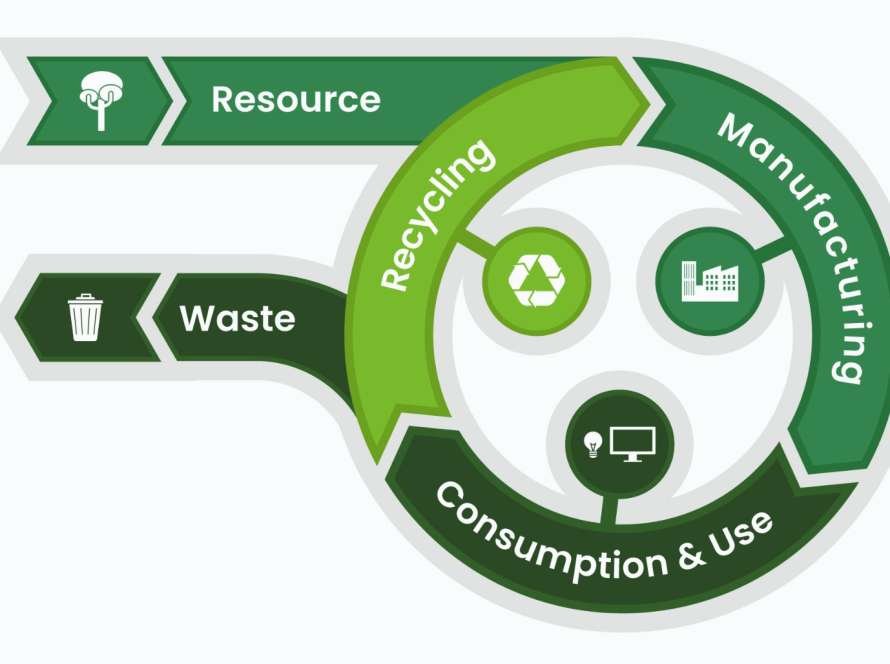
These partnerships strengthen regional supply resilience and support the rapid electrification of sectors such as transportation, data centers, and renewable energy storage. They also align with broader climate goals by promoting lower-emission materials and circular production models. As North America continues to invest in localized manufacturing, the continent’s LFP battery growth trajectory looks increasingly strong. The shift from import dependence to domestic innovation signals a promising new chapter for clean energy and industrial competitiveness.