Battery Supply Chain Divergence in the U.S. Signals Strategic Shift Toward Energy Storage
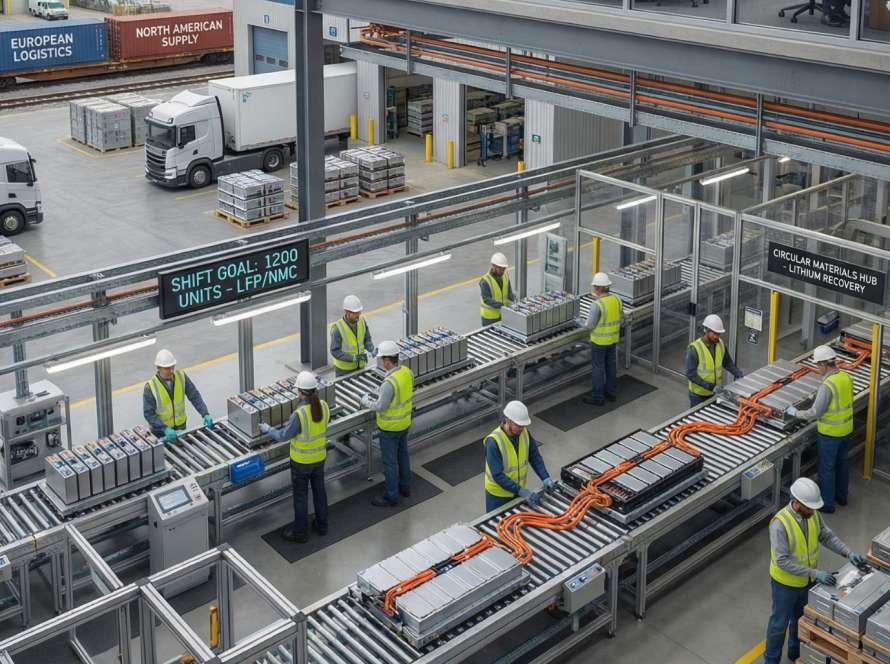
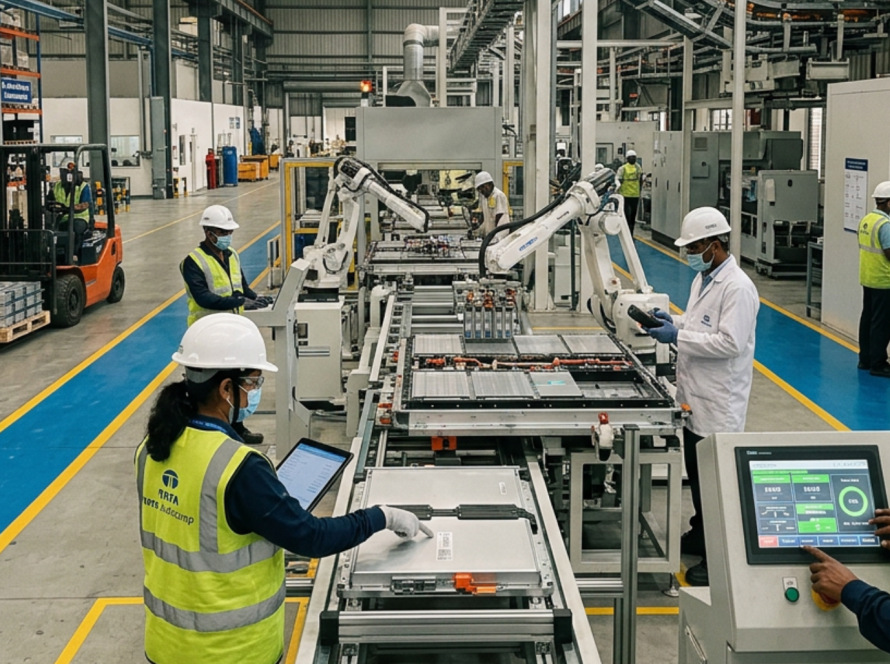
The elimination of the United States’ federal electric vehicle tax credit has triggered a structural realignment in domestic battery manufacturing. While the long-term implications remain uncertain, what is becoming clear is that U.S.-based battery producers are increasingly pivoting away from EVs and toward grid-scale energy storage systems (ESS).
Manufacturers Rethink Growth Priorities
Companies like LG Energy Solution, which is expanding its ESS facility in Michigan, and SK and Samsung, now entering the U.S. storage market, are reprioritizing investment. With electric vehicle growth softening, battery makers are adjusting production and capacity planning to meet the growing demand for large-scale storage systems.
Incentive Structures and Market Shifts Drive the Change
According to Ravi Manghani, Senior Director of Strategic Sourcing at Anza Renewables, this pivot is not a reactive shift, but rather an acceleration of a trend that has been forming for years. He cites the Inflation Reduction Act (IRA) as a key driver. While the EV tax credit required domestic sourcing of both battery materials and manufacturing, the Investment Tax Credit (ITC) for storage is primarily linked to content origin, encouraging localization.
This policy framework has made U.S. energy storage markets more attractive and competitive, especially as data center energy demand rises and traditional gas-based generation faces long development timelines.
Divergence Between EV and ESS Supply Chains Becomes Clearer
For the first time, the ESS and EV battery supply chains are structurally diverging. This separation affects every layer of the value chain:
- Procurement complexity is increasing due to fragmented supplier relationships and shorter contract cycles.
- Price transparency is decreasing, with non-uniform requirements and less standardized offerings.
- Geopolitical considerations, including Foreign Entity of Concern (FEOC) rules, are forcing procurement teams to factor in compliance and national security alongside cost.
According to Manghani, contracting decisions now weigh reliability and compliance as heavily as price, leading to more nuanced and strategic sourcing conversations.
Innovation and Scale at a Crossroads
This decoupling has implications for innovation and cost dynamics. Historically, shared scale between ESS and EV production helped bring down lithium-ion battery costs. As supply chains separate, innovation may slow or become more segmented, with fewer opportunities for crossover benefits between markets.
Still, Manghani remains optimistic. While U.S. EV growth may plateau in the short term, the global EV market continues to anchor most battery research and technological progress. Energy storage is no longer a side segment—it is emerging as a standalone growth engine for the battery industry.
Key Insight
For C-suite leaders in energy, mobility, and manufacturing, this battery supply chain divergence is more than a market trend. It marks a strategic inflection point in how batteries are sourced, built, and deployed across sectors.
The rise of ESS as a separate supply chain vertical presents opportunities for investment, innovation, and policy engagement. However, it also demands a reassessment of risk exposure, supplier diversification, and technology partnerships. As supply chains mature and regionalize, executives will need to navigate a new normal of bifurcated priorities, where ESS and EV markets operate on parallel, but increasingly independent, tracks.
U.S. battery supply chain resilience amid policy and market realignment read more